
Home

Products

Integrated Circuits (ICs)

Logic

Flip Flops

TC74HC173APF

Banner
productimage

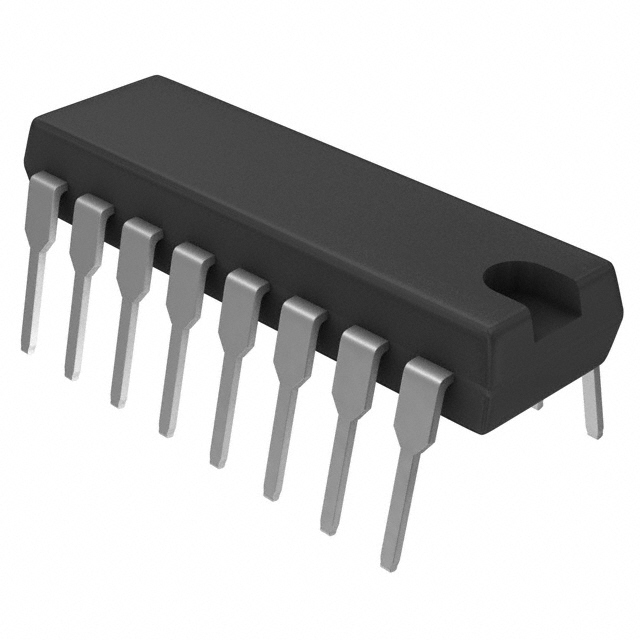
TC74HC173APF

IC FF D-TYPE SNGL 4BIT 16DIP

Manufacturer: Toshiba Semiconductor and Storage

Categories: Flip Flops

Quality Control: Learn More

Toshiba Semiconductor and Storage 74HC series TC74HC173APF is a single, 4-bit, D-type flip-flop featuring positive edge triggering. This device offers tri-state, non-inverted outputs and a master reset function. Designed for through-hole mounting, it is supplied in a 16-DIP (0.300", 7.62mm) package. Key electrical characteristics include a maximum clock frequency of 84 MHz and output drive capability of 7.8mA for both high and low states. Quiescent current is a low 4 µA, with an input capacitance of 5 pF. The maximum propagation delay is 26 ns at 6V with a 150 pF load. Operating voltage ranges from 2V to 6V, and the component is rated for operation between -40°C and 85°C. This component finds application in industrial automation and consumer electronics.

Additional Information

Series: 74HCRoHS Status: unknownManufacturer Lead Time: No lead time information availableProduct Status: ObsoletePackaging: Tube
Technical Details:
PackagingTube
Package / Case16-DIP (0.300"", 7.62mm)
Output TypeTri-State, Non-Inverted
Mounting TypeThrough Hole
Number of Elements1
FunctionMaster Reset
TypeD-Type
Operating Temperature-40°C ~ 85°C (TA)
Voltage - Supply2V ~ 6V
Current - Quiescent (Iq)4 µA
Current - Output High, Low7.8mA, 7.8mA
Trigger TypePositive Edge
Clock Frequency84 MHz
Input Capacitance5 pF
Supplier Device Package16-DIP
Max Propagation Delay @ V, Max CL26ns @ 6V, 150pF
Number of Bits per Element4

Request a Quote

Name (required)

Phone (required)

Work Email (required)

Country (required)

Company Name (required)

CAPTCHA

By providing a telephone number and submitting the form, you are consenting to be contacted by SMS text message and agreeing to our Privacy Policy. Message frequency may vary. Message and data rates may apply. Reply STOP to opt out of further messaging. Reply HELP for more information.
Clients Also Buy
Integrated Circuit FAQs

An integrated circuit (IC) is a semiconductor chip that contains transistors, resistors, capacitors, and other electronic components on a single silicon substrate. ICs are the foundation of modern electronics and power devices such as smartphones, computers, automotive systems, and industrial equipment.

Integrated circuits work by routing electrical signals through microscopic semiconductor components fabricated onto a silicon chip. Depending on the design, ICs can process, amplify, store, or control electronic data.

Integrated circuits are used in:

The different types of integrated circuits include:

Frequently Asked Questions

As a full line supplier, we specialize in sourcing obsolete and hard to find electronic components for your projects.

After we receive your request submission, one of our account executives will reach out to your team to gather more information about your project requirements and ensure we tailor the order to your needs.

Once requirements such as date codes, quantities, target prices, testing requirements, and more are discussed, our purchasing team will secure stock through Microchip USA’s direct access to manufacturing partners’ excess inventory lists.

Our operations teams will handle logistics and fulfillment to ensure supply chain continuity, and our support team will provide clear communication throughout the process.

Our net terms for electronic component sourcing are flexible and vary by order. Our account executives will work with you to ensure our terms meet your company’s needs. We also offer scheduled shipments and inventory management solutions to ensure a steady supply of electronic components, maintain cash flow, and maximize warranty periods. We always offer a warranty on all tested parts. See our sales terms and conditions for more information.

We partner with industry-leading AS6171 & AS6081-certified third party testing labs to mitigate risk and support a wide array of end uses for your company’s requirements. Testing includes but isn’t limited to: Decapsulation & Internal Dye Verification. X-Ray Inspection & Analysis, External Visual Inspection, Surface Texture Analysis (SEM), and Electrical Pin Correlation.