
Home

Products

Capacitors

Ceramic Capacitors

CKC21C273KDGAC7210

Banner
productimage

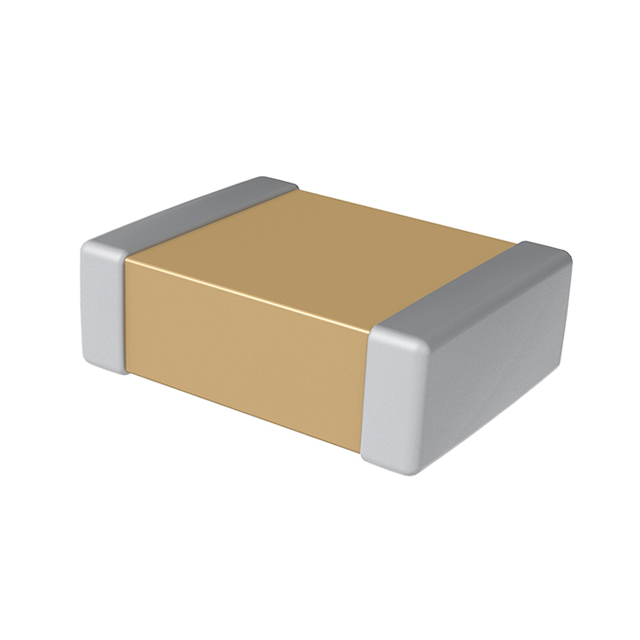
CKC21C273KDGAC7210

KC-LINK 2220 27NF 1000VDC C0G

Manufacturer: KEMET

Categories: Ceramic Capacitors

Quality Control: Learn More

KEMET KC-LINK Comm C0G series ceramic capacitor, part number CKC21C273KDGAC7210. This MLCC features a capacitance of 0.027 µF with a ±10% tolerance and a 1000VDC (1kV) rating. Designed for demanding applications, it utilizes C0G/NP0 dielectric material, ensuring exceptional temperature stability and low distortion. The component is housed in a 2220 (5750 Metric) case, measuring 0.224" L x 0.197" W (5.70mm x 5.00mm) with a maximum thickness of 0.087" (2.20mm). Key features include low Equivalent Series Inductance (ESL), high voltage capability, and an operating temperature range of -55°C to 150°C. This device is supplied in Tape & Reel (TR) packaging and is suitable for general-purpose applications across industries such as automotive, industrial, and telecommunications.

Additional Information

Series: KC Link Comm C0GRoHS Status: ROHS3 CompliantManufacturer Lead Time: 32 week(s)Product Status: ActivePackaging: Tape & Reel (TR)Datasheet:
Technical Details:
Tolerance±10%
Lead Style-
FeaturesLow ESL, High Voltage, High Temperature
PackagingTape & Reel (TR)
Voltage - Rated1000V (1kV)
Package / Case2220 (5750 Metric)
Temperature CoefficientC0G, NP0
Size / Dimension0.224"" L x 0.197"" W (5.70mm x 5.00mm)
Mounting TypeSurface Mount, MLCC
Operating Temperature-55°C ~ 150°C
ApplicationsGeneral Purpose
Lead Spacing-
Ratings-
Height - Seated (Max)-
Thickness (Max)0.087"" (2.20mm)
Failure Rate-
Capacitance0.027 µF

Request a Quote

Name (required)

Phone (required)

Work Email (required)

Country (required)

Company Name (required)

CAPTCHA

By providing a telephone number and submitting the form, you are consenting to be contacted by SMS text message and agreeing to our Privacy Policy. Message frequency may vary. Message and data rates may apply. Reply STOP to opt out of further messaging. Reply HELP for more information.
Clients Also Buy
Capacitor FAQs

A capacitor is an electronic component that stores and releases electrical energy within an electric field.

A capacitor works by storing electrical charge between two conductive plates separated by a dielectric material. When needed, the stored energy is released back into the circuit.

Capacitors are used for:

  • Energy storage
  • Voltage regulation
  • Signal filtering
  • Timing circuits
  • Power conditioning
  • Signal coupling

Frequently Asked Questions

As a full line supplier, we specialize in sourcing obsolete and hard to find electronic components for your projects.

After we receive your request submission, one of our account executives will reach out to your team to gather more information about your project requirements and ensure we tailor the order to your needs.

Once requirements such as date codes, quantities, target prices, testing requirements, and more are discussed, our purchasing team will secure stock through Microchip USA’s direct access to manufacturing partners’ excess inventory lists.

Our operations teams will handle logistics and fulfillment to ensure supply chain continuity, and our support team will provide clear communication throughout the process.

Our net terms for electronic component sourcing are flexible and vary by order. Our account executives will work with you to ensure our terms meet your company’s needs. We also offer scheduled shipments and inventory management solutions to ensure a steady supply of electronic components, maintain cash flow, and maximize warranty periods. We always offer a warranty on all tested parts. See our sales terms and conditions for more information.

We partner with industry-leading AS6171 & AS6081-certified third party testing labs to mitigate risk and support a wide array of end uses for your company’s requirements. Testing includes but isn’t limited to: Decapsulation & Internal Dye Verification. X-Ray Inspection & Analysis, External Visual Inspection, Surface Texture Analysis (SEM), and Electrical Pin Correlation.