The semiconductor industry is the foundation of today’s digital economy, supporting technologies that range from consumer electronics and automotive systems to industrial automation, data centers, and emerging applications in artificial intelligence and clean energy. The industry's global significance continues to grow as nations and businesses rely on semiconductor innovations to drive connectivity, efficiency, and economic development. The market represents hundreds of billions of dollars in annual revenue, and its influence reaches every primary sector of modern life, making it one of the most strategically important industries in the world.
Market Scope and Scale
The semiconductor industry is a highly integrated and capital-intensive global market that encompasses design, fabrication, assembly, testing, and distribution. Semiconductor manufacturing depends on a complex network of worldwide equipment suppliers, materials providers, and technology partners.
Regional manufacturing growth is encouraged to diversify supply chains and strengthen economic security, while companies invest in advanced fabrication plants and research facilities. Demand continues to expand with the increase of connected devices, automation, and new computing models, ensuring a broad and resilient market scope for the future.
Key Trends and Developments
Several structural and technological trends are shaping the current landscape.
Technological Advancement: Continuous improvements in semiconductor technology, from smaller transistor nodes to advanced packaging and new materials, are enabling higher performance and energy efficiency in chips used for computing, communications, and automotive applications.
Artificial Intelligence and Data Growth: The rising importance of AI, cloud computing, and data analytics drives a need for powerful processors and memory solutions, pushing innovation in hardware and design methodologies.
Automotive and Industrial Electronics: Electric vehicles, autonomous driving features, smart factories, and renewable energy systems all require more sophisticated semiconductor components, expanding the market's reach.
Energy Efficiency and Sustainability: The industry is increasingly focused on reducing device power consumption and minimizing the environmental impact of manufacturing, aligning with global sustainability goals.
Digital Transformation of Industries: Healthcare, finance, logistics, and consumer services are adopting digital solutions that depend on reliable semiconductor technologies.
Supply Chain and Geopolitics
The semiconductor supply chain is intricate and global, relying on specialized capabilities distributed across multiple continents. This interconnectedness brings both opportunities and vulnerabilities. Geopolitical developments such as trade policy changes, regional competition, and investment in domestic manufacturing influence how and where chips are produced. Governments worldwide offer incentives to localize critical production parts and mitigate risk from natural disasters or market shocks. At the same time, companies are diversifying suppliers, enhancing inventory strategies, and investing in new manufacturing regions to create more resilient operations.
Learn More: The Importance of Open Market Distributors for Supply Chain Strategy
Challenges and Opportunities
The industry faces challenges that test both its resilience and adaptability. Building and maintaining state-of-the-art manufacturing facilities requires immense capital investment and a highly skilled workforce, while technological complexity continues to increase with every new generation of chips. Supply chain disruptions, talent shortages, and evolving international regulations add layers of uncertainty.
These pressures also open opportunities. Companies investing in resilient supply networks, advanced materials, and AI-driven design automation stand to benefit. Government incentives, emerging applications like quantum computing and edge AI, and a growing emphasis on sustainability further create fertile ground for innovation and long-term growth.
Component Manufacturers
Component manufacturers are central to the semiconductor sector, transforming advanced research and raw silicon wafers into integrated circuits and discrete devices that power nearly every modern technology. Their work ensures the reliable supply of critical components that enable consumer electronics, automotive systems, industrial automation, telecommunications, and advanced computing applications such as artificial intelligence.
Core Products
These companies design and produce various essential semiconductor products, including microcontrollers, processors, memory chips, analog and mixed-signal components, power management devices, and specialized sensors. Their ability to deliver high-performance components at scale supports innovation across industries that demand precision, efficiency, and long product lifecycles.
Innovations and Technologies
Innovation drives growth in the semiconductor industry. Leading manufacturers invest heavily in advanced fabrication processes - such as smaller nanometer nodes, 3D chip stacking, and cutting-edge packaging technologies to boost performance, energy efficiency, and miniaturization . They are also advancing new frontiers, including silicon photonics, quantum computing elements, and application-specific chips for machine learning and edge computing. These breakthroughs help meet rising demands for sustainable, energy-efficient, and high-speed solutions
Competitive Landscape
The semiconductor market is intensely competitive and global. Industry giants like Intel, TSMC, Samsung, and Texas Instruments compete with specialized manufacturers such as Analog Devices, NXP, and Infineon. Competitive advantages stem from manufacturing capacity, supply chain resilience, design innovation, and the ability to adapt quickly to fast-changing markets such as electric vehicles, 5G networks, and AI workloads. High capital investment and rapid technology cycles favor companies capable of balancing cutting-edge innovation with dependable production, ensuring their critical role in the global semiconductor ecosystem.
Key Manufacturers

Advanced Micro Devices (AMD)
AMD is a global semiconductor leader, driving innovation with Ryzen™, EPYC™, Radeon™, and Xilinx FPGAs. Its solutions power data centers, AI, 5G, and HPC with the performance and efficiency shaping the future of computing.

Altera
Formerly part of Intel, Altera is a leading FPGA innovator with product families like Stratix, Cyclone, Max 10, and Arria. Now independent, it continues driving advances in programmable logic across industries.

NXP
NXP Semiconductors is a global leader in automotive, IoT, and secure identification solutions, delivering secure, energy-efficient technologies that power digital transformation worldwide.
Component Types
Electronic components are the fundamental building blocks of modern technology, forming the backbone of everything from everyday consumer devices to advanced industrial and aerospace systems. They enable the flow, control, and processing of electrical signals, making possible the innovation that drives communication, computing, automation, and energy management. These essential components determine every electronic system's functionality, performance, and reliability.
Learn More: Component Types
Broad Categories
To understand how these components work, it's helpful to distinguish their two broad categories:
Passive Components (such as resistors, capacitors, inductors, and transformers) manipulate current, voltage, and energy storage without the need for an external power source.
Active Components (including diodes, transistors, integrated circuits (ICs), Field-Programmable Gate Arrays (FPGAs), and Complex Programmable Logic Devices (CPLDs)) require an external power source and actively control electrical signals, performing logic operations, amplification, and data processing.
Common Component Types
Modern electronics depend heavily on advanced integrated and programmable technologies, which combine multiple functions into compact, highly efficient chips:
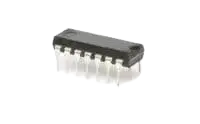
Integrated Circuits (ICs)
(ICs) combine multiple components on a single chip, delivering compact, efficient, and reliable performance in modern electronics.
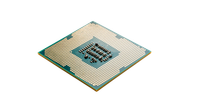
Field-Programmable Gate Arrays (FPGAs)
FPGAs are reprogrammable integrated circuits that offer flexibility through configurable logic blocks, interconnects, and I/O elements for custom hardware design.
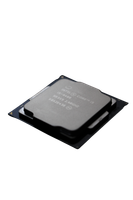
Complex Programmable Logic Devices (CPLDs)
CPLDs are programmable chips optimized for control-oriented logic, offering reliability, low power consumption, and quick design turnaround.
These components often work together - ICs provide general processing, FPGAs offer adaptable logic, and CPLDs handle fast, deterministic control - to create scalable solutions from simple consumer gadgets to complex industrial systems.
Role In Applications
Programmable and integrated components power an enormous range of applications. ICs deliver the computational and memory capabilities found in smartphones, computers, and industrial controllers. FPGAs enable custom, high-performance processing for telecommunications, data centers, aerospace, and automotive systems that require rapid hardware reconfiguration. CPLDs handle the precision logic control needed in embedded devices, power management circuits, and IoT solutions. Together, they drive reliability, flexibility, and performance in today's connected world.
Innovations
The field of electronic components is constantly advancing. Semiconductor miniaturization and System-on-Chip (SoC) integration allow more functions to fit into smaller footprints, reducing power consumption and improving performance. FPGAs now feature built-in machine learning accelerators and enhanced security, while CPLDs continue to evolve for low-power and IoT-ready applications. These developments align with broader trends such as Internet of Things (IoT) expansion, wearable technologies, and next-generation computing, ensuring that electronic components remain at the heart of future innovation.